Why Your PCOS Symptoms Change Every Week — And How to Eat Around It
Why your acne is worse some weeks. Why your cravings are out of control others. Why you can feel sharp and capable mid-month and then foggy and exhausted a week later. If you’re living with PCOS or PMOS, hormonal changes can make those shifts feel even louder.
Why your acne is worse some weeks. Why your cravings feel out of control at other times. Why you feel energetic and focused in one part of your cycle and then foggy, tired or more hungry later.
These changes aren’t necessarily random. Your menstrual cycle involves changing reproductive hormones, and those shifts can affect appetite, energy balance, mood and how you experience your body.
When you also have PCOS or PMOS, the picture can become harder to predict because cycles may be longer, irregular or anovulatory.
Your hormones don’t stay the same — so why is your diet?
Most nutrition advice treats the body like a fixed machine: eat the same number of calories, train the same number of times, and follow the exact same routine every week.
But the menstrual cycle isn’t static. Oestrogen and progesterone change across the cycle, and research suggests that food intake, appetite and energy balance can shift alongside those changes.
That doesn’t mean you need four completely different diets every month. It means there can be value in noticing the patterns your own body is showing you.
Cycle-aware eating isn’t another rigid set of rules. It’s a way of using your symptoms, appetite and energy as useful feedback.
The four phases — what’s happening in your body?
Here’s the simplified version of what your hormones are doing during each phase.
Why PCOS / PMOS makes this harder
PCOS is a heterogeneous endocrine and metabolic condition. Two women with PCOS can have very different symptoms, cycle patterns and metabolic profiles.
Insulin resistance and compensatory hyperinsulinaemia can occur in PCOS and may interact with ovarian hormone signalling, androgen excess and reproductive dysfunction.
This is one reason a simple four-week calendar doesn’t always work for women with PCOS. Your cycle may be longer, ovulation may be delayed or absent, and symptoms may not line up neatly with textbook cycle days.
“My body feels different every week, so I’m doing something wrong.”
“My symptoms are giving me information I can use to make my routine more flexible.”

What cycle-phase eating actually looks like
You don’t need to overhaul your diet four times a month. The foundation should stay consistent while small adjustments are made around appetite, energy, cravings and recovery.
Keep protein consistent
Include a meaningful source of protein at your main meals: dal, eggs, curd, paneer, fish, chicken, soy, beans or another option that suits your diet. Protein can make meals more satisfying and support muscle maintenance.
Don’t fear carbohydrates
Oats, rice, roti, potatoes and sweet potatoes can all fit into a balanced PCOS-friendly eating pattern. Pair carbohydrate sources with protein, vegetables and fibre to create a more balanced meal.
Make the luteal phase more filling
If appetite or cravings rise, build meals around protein, fibre-rich foods and satisfying fats rather than trying to “win” by eating as little as possible.
Match training to recovery
Use energy levels, sleep and symptoms as feedback. You may tolerate harder training well on some days and benefit from walking, mobility or lower-intensity work on others.
Track patterns, not just dates
Note cravings, appetite, sleep, energy, digestion, skin changes, bleeding and training tolerance. With irregular cycles, these patterns can be more informative than a calendar alone.
Cycle-aware eating should make your routine more flexible — not give you another set of rules to obsess over.
The part Indian women are often missing
A lot of cycle-syncing content online is built around Western food patterns. But you don’t need to replace your Indian meals to build a more balanced PCOS-friendly routine.
Daal, sabzi, roti, rice, curd, paneer, eggs and other familiar foods can all have a place in your diet.
The bigger opportunity is often meal composition. Instead of building a plate mostly around rice or roti with a very small protein portion, increase the protein and vegetable component and choose a carbohydrate portion that fits your hunger and activity.
Large carbohydrate portion + small protein portion + very little fibre.
Protein + vegetables or fibre + an appropriate portion of rice, roti or another carbohydrate.
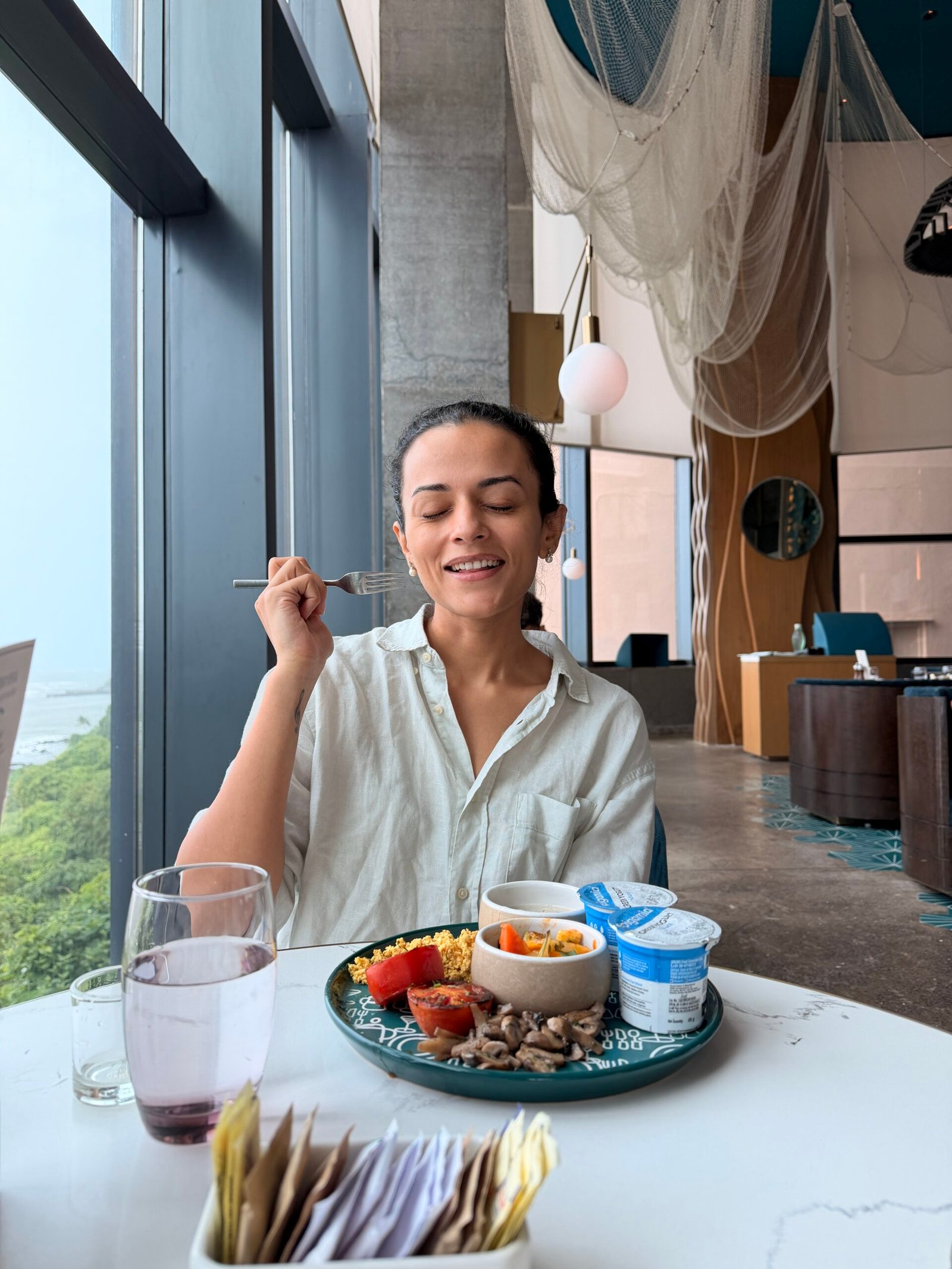
That is the thinking behind the ALTER Core protocol: practical nutrition built around your routine, your food preferences and the metabolic challenges you are actually dealing with.
Build a plan around your body — not a generic diet.
If you want a more personalised approach to nutrition, movement and lifestyle for PCOS / PMOS, explore the ALTER Core programme.
Explore ALTER Core →Frequently asked questions
Can I use cycle-phase eating if my periods are irregular because of PCOS?
Yes, but calendar-based phase tracking becomes less reliable when cycles are irregular. Tracking symptoms such as appetite, cravings, energy, sleep and bleeding can give you more useful information about your own patterns.
Does cycle-phase eating directly cause PCOS weight loss?
Not by itself. Cycle-aware eating is better understood as a way of adapting your routine around changes in appetite, energy and symptoms. Sustainable weight management still depends on the overall nutrition, activity, recovery and health picture.
Do I need to stop eating rice or roti if I have PCOS?
Not necessarily. Rice and roti can fit into a balanced eating pattern. Meal composition, portions, protein, fibre and your individual goals are more important than automatically eliminating one carbohydrate food.
What if I’m on the pill or hormonal contraception?
Hormonal contraception changes the hormonal pattern compared with a natural ovulatory cycle. A cycle-syncing approach should therefore be adapted to your specific medication or contraceptive method rather than assuming a natural cycle pattern.
What should I track if my cycle is unpredictable?
Track appetite, cravings, sleep, energy, digestion, skin changes, bleeding and exercise tolerance. Looking for recurring patterns can be more useful than trying to force an irregular cycle into a standard 28-day template.
When should I speak to a healthcare professional?
Speak with an appropriately qualified healthcare professional if you have very irregular or absent periods, significant symptoms, unusual bleeding, severe pain, fertility concerns, or questions about medications, contraception or your PCOS treatment plan.
Sources
- Barnard ND, Scialli AR, Hurlock D, Bertron P. Diet and sex-hormone binding globulin, dysmenorrhea, and premenstrual symptoms. Obstetrics & Gynecology. 2000;95(2):245–250.
- Davidsen L, Vistisen B, Astrup A. Impact of the menstrual cycle on determinants of energy balance: a putative role in weight control. British Journal of Nutrition. 2007;98(1):11–17.
- Stener-Victorin E, Teede H, Norman RJ, et al. Polycystic ovary syndrome. Nature Reviews Disease Primers. 2024;10.
- Boyle NB, Lawton CL, Dye L. The effects of magnesium supplementation on subjective anxiety and stress — A systematic review. Nutrients. 2017;9(5):429.